


SKYCLARYS SLOWED FA PROGRESSION IN THE MOXIe CLINICAL TRIAL
Patients featured are paid spokespersons for Biogen.
Patients taking SKYCLARYS showed less physical impairment over 48 weeks
The MOXIe clinical trial was the largest Friedreich ataxia (FA) study of its kind.
The MOXIe trial included 103 patients with FA across 3 continents who were 16 to 40 years old. They each had a genetically confirmed diagnosis of FA and a baseline modified Friedreich Ataxia Rating Scale (mFARS) score between 20 and 80. These patients were randomized into a SKYCLARYS treatment group or a placebo treatment group. The results of treatment were measured over 48 weeks using the mFARS exam.
Treatment with SKYCLARYS resulted in statistically lower scores on the mFARS compared with untreated patients in the placebo group at 48 weeks.*
This means that, on average, patients taking SKYCLARYS had less physical impairment after 48 weeks of treatment compared with untreated patients in the clinical trial.*
The average change in mFARS score for patients taking SKYCLARYS was 2.41 points less than it was for untreated patients.
Clinical trial results from
MOXIe at 48 weeks

*In the population without pes cavus (high arch; n=82).
Results from the MOXIe clinical trial were measured using the mFARS. The mFARS is a neurological exam that looks at 4 areas that relate to everyday activities. Together they may paint a picture of your overall physical function, including:

Mouth and
throat
function

Upper limb
coordination

Lower limb
coordination

Upright
stability
The mFARS exam is scored on a scale of 0 to 93, with higher scores meaning greater physical impairment. While rates of progression depend on several factors and can vary from person to person, people with FA typically progress at an average rate of about 2 points per year.
Set your sights on your long-term treatment goals
Results from a 3-year exploratory analysis
At the end of the MOXIe clinical trial, all patients who participated were given the option to continue in a longer-term study called an open-label extension study.
Before participating in the open-label extension study, patients were asked to temporarily stop taking their treatment. Then, all patients were given SKYCLARYS, including those who were in the placebo group during the clinical trial.
After 3 years of treatment, people taking SKYCLARYS experienced less functional loss compared to those who were untreated
Researchers took the results from the 3-year open-label extension study and compared them with a matched set of untreated patients in the Friedreich Ataxia Clinical Outcome Measures Study (FA-COMS). FA-COMS is an ongoing natural history study that measures the progression of more than a thousand FA patients to determine just how the condition progresses.
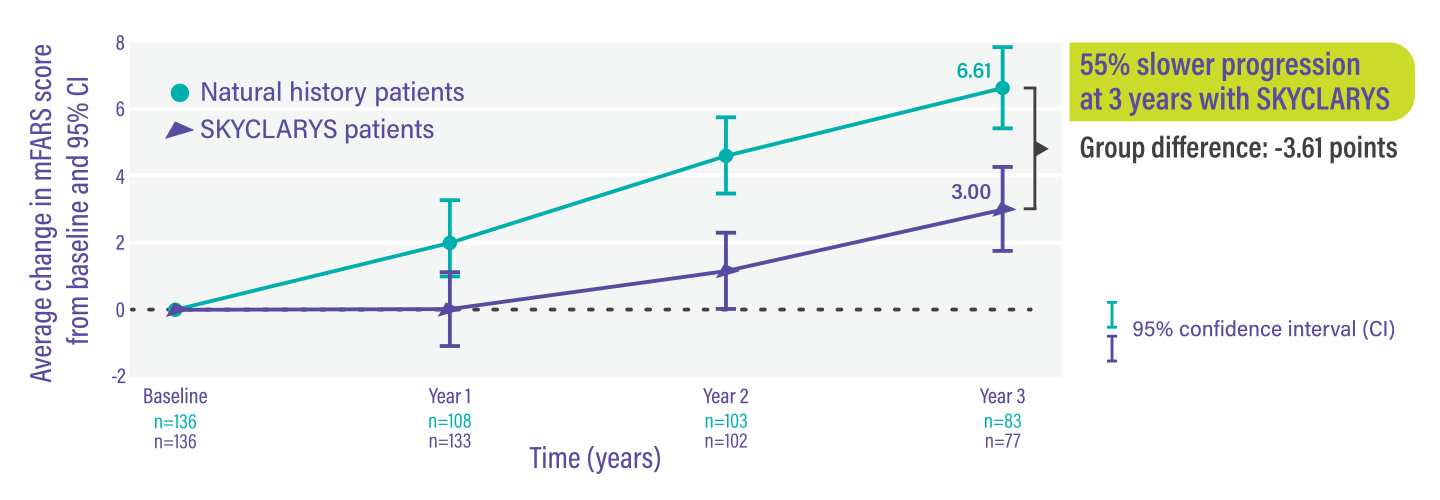
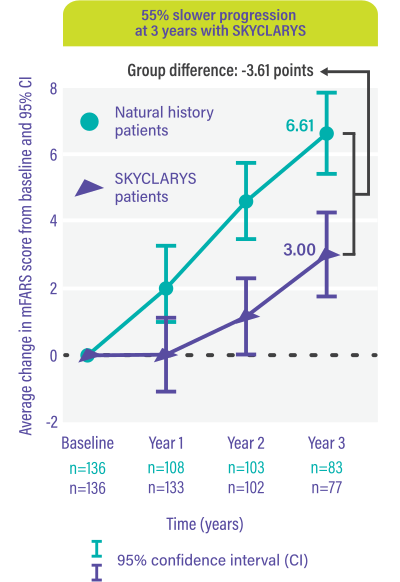
This kind of study is called an “exploratory analysis” and is not the same as a clinical trial. Because of that, there are some limitations and the results should be interpreted cautiously.
95% confidence interval (CI) means that if the study were repeated with a similar patient population and the same study design, the results would likely fall in this range 95% of the time.